CACTUS CLUB
🌵
Know someone who might enjoy the Cactus Diet? Forward it their way.
We agree that the time we spend on our smartphones is bad for us as well as for society, and that it’s now becoming necessary to carve out moments without smartphones, places without smartphones, and even entire segments of life without smartphones.
We agree.
The problem is that we don’t have a word to describe this modern cultural reality.
And if we want to escape this hell while also moving things forward, we need a new word for this new phenomenon. Because saying things like, “Let’s have dinner at my place—but no phones?”; or “Starting September 23, our establishment will welcome you without your phone”; or even “Rehearsals will be held without phones”—well, that’s not very effective. We need to be able to say simply and directly: since I’ve chosen to be with you without the constant interference of algorithms that make you dream for five minutes before making you anxious for two hours, I won’t bring (or will turn off) my smartphone.
We need this word.
My suggestion is: cactus.
Cactus: the act of stopping the use of cell phones—whether temporarily or not—with the goal of reconnecting with oneself and the world, as well as regaining a sense of community (see: diet).
With this word, we’d be understood right away: Let’s have a cactus dinner at my place, okay? Starting September 23, your establishment will go cactus. This waiting room is cactus. We’ll have a cactus rehearsal, okay? On Sunday, I’m doing cactus.
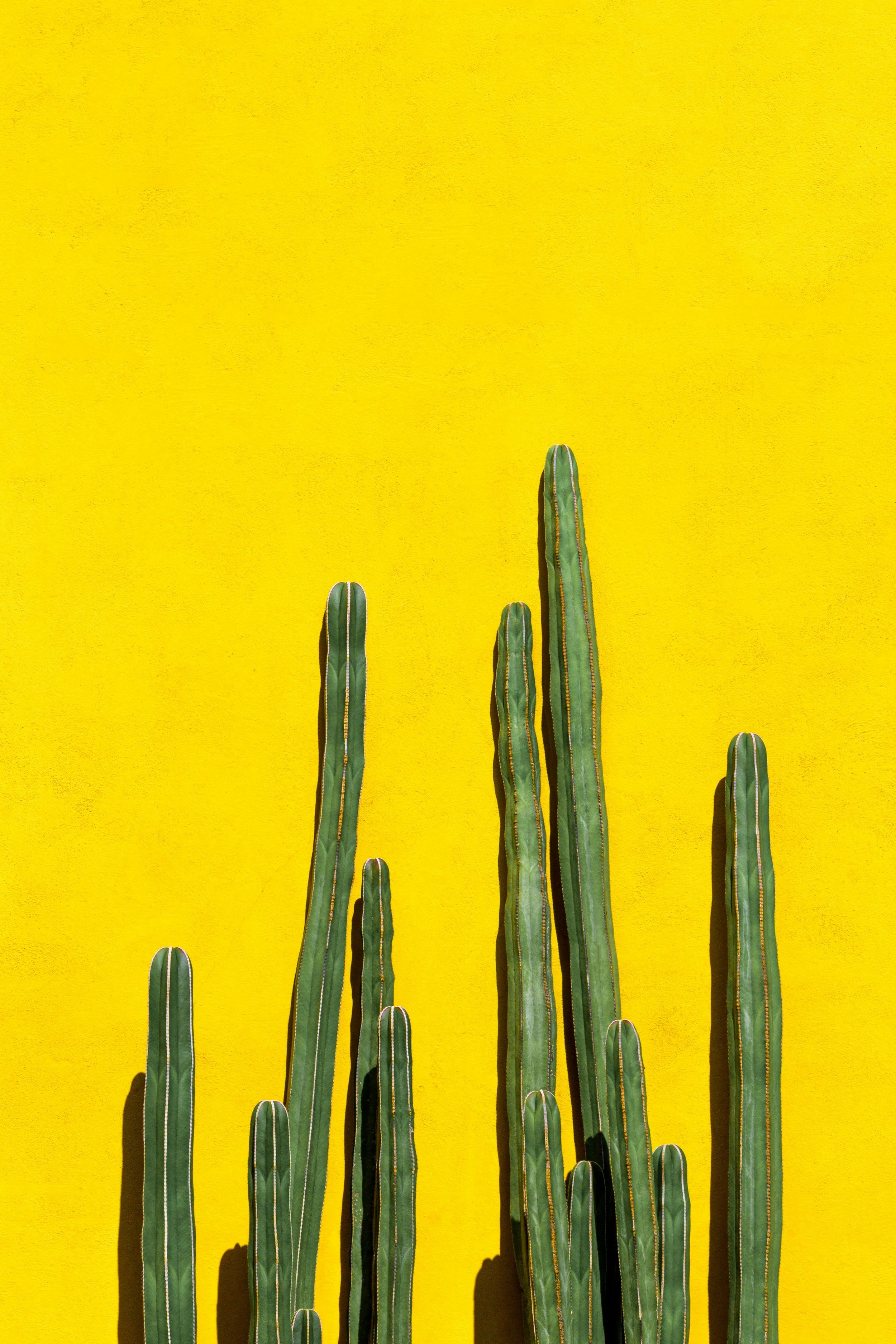
Photo de rotekirsche20 sur Unsplash
But why “cactus”? That word’s already taken, you might say…
First, because the cactus—with its spines and magnificent flowers—is a beautiful metaphor for the slightly crazy challenge of putting down our smartphones in the world we live in.
Second, because the word “cactus” is pronounced more or less the same way in every language around the world: kaktus, cactys, cacto, kaktos, kaiktas, кактус, קאַקטוס. The whole world—from Finland to Colombia, from Kazakhstan to Tanzania—could therefore immediately understand what a “cactus day,” a “cactus waiting room,” or a “cactus party” is—
it would be a single word for a universal reality.
In fact, people around the world whose languages don’t have “cactus” or a related term (in Arabic, Malayalam, Chinese, Sinhala, Kurdish, Thai, Marathi, Korean, Tamil, and certainly others), we need your help: could you suggest a way to incorporate the word “cactus” into your language to refer to this smartphone break?
And above all, a cactus is more than just a word: it’s an image, a simple shape that’s recognizable in every country around the world. You can put it on little ribbons, stickers, bracelets, and pins (yes, I’m a child of the ’80s). It’s an expressive shape that you can stick on the wall of a waiting room, pin to your workout T-shirt, or wear as a bracelet while waiting for friends at a bar—signaling that you won’t pull out your smartphone just to look busy, no, you’ll just own that slightly nervous look people have when they’re waiting for other people.
A cactus can even be slipped into any message, any status update!
It’s as simple as an emoji.
It’s a way of saying: you know what I mean, too. Are you also trying to find your way out of the dark forest?
We could conjugate “to cactus” (I cactus, you cactus, he/she/they cactus…), we could be a cactus (if we’re not the tech-savvy type), we could “cactus,” we could describe kids who grew up in “cactus clubs”—without smartphones—instead of saying “healthy” or “old-school,” we’d say they’re just normal kids, very “cactus.” We could embrace the shifts in meaning—the ones you want to give them, the ones we want to invent—for this hardy plant that’s been through her fare share.
In every language in the world, on every tongue, “cactus” would therefore mean: “1. A succulent plant with fleshy stems bearing clusters of spines. 2. The act of stopping the use of cellphones—whether temporarily or not—in order to reconnect with oneself and the world, as well as to rediscover a sense of human community. 3. The sum of insights and practices that require stepping away from a technology that is harming humanity”—oh right, a dictionary is that very thick book where you have to google words alphabetically, all by yourself, flipping through very thin pages where the text is written in tiny print.
I believe we can do it: with emojis on our social media and stickers, with symbols, and with the tips of our pins, we can build a super cactus world.
How about spreading the word?
🌵
Translation of the text by Deepl.com and her author